
Five Strategies to Become a Better Writer

Sometimes, the skill of writing can seem difficult to practice. It often feels like skilled writers were blessed with a natural talent, and bad writers are just stuck that way. Unlike basketball and skateboarding, which you can go practice in your driveway, writing can seem impossible to practice. How do you get “reps” as a developing writer? How do writers get good? And how do you know if you’re getting better?
It turns out that writing is a skill you can practice and develop, just like any other. If you put intentional effort into writing more frequently, and studying what great writers do, you will become better yourself. In this article, I’ll outline my five favorite strategies to help you grow as a writer.
Five Strategies to Become a Better Writer
As an English teacher and writer myself, these are the primary strategies I utilize in my classroom and personal daily routine. They’ll help you develop your writing skills for any purpose—school and academic writing, work, or day-to-day written communications.

Write Everyday (Anything)
The most important ingredient is volume: to grow as a writer, you need to write more. This means setting aside some time daily to put words on a page, whether you’re typing or writing by hand. As you practice the habit of writing, you strengthen the flow from thoughts and feelings to words. With comfort and familiarity over time, you’ll find yourself striving to write more nuanced ideas, using longer and more complex sentences. This is how you develop your own writing style and voice over time.
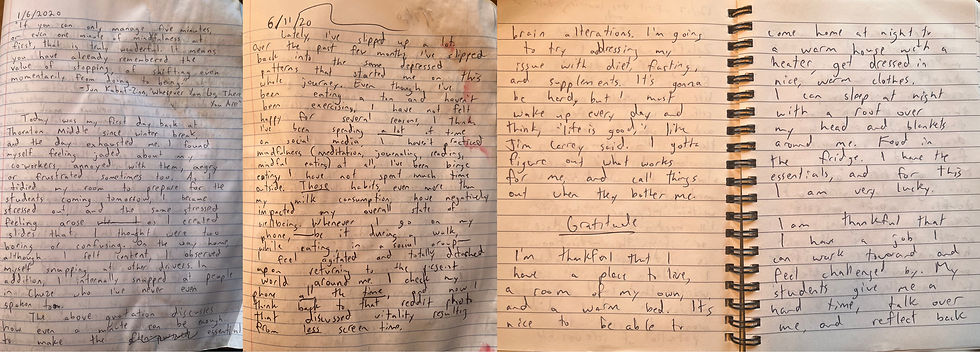
Write whatever you want: poetry, a diary or journal, short stories, words mixed with doodles, or your thoughts on an album you’ve recently enjoyed. Pick a format that interests you and write about whatever's on your mind Personally, I practice daily writing by keeping a journal and drafting short stories, which I may or may not publish someday.
Read Challenging Books
Daily writing and daily reading go hand in hand. Consuming quality literature gives you a model of how your language can look. While reading, you notice everything the writer does, even if subconsciously. You absorb things like the writer’s choices in sentence structure, how they construct paragraphs and chapters, the types of ideas they present. And as you study different styles and genres, these lessons gradually manifest in your writing.
The famous saying that you are “the average of the five people closest to you” applies to your writing—you emulate and borrow from what you read, whether it’s classics, modern fiction, sci-fi, young adult literature, philosophy, or your favorite blogger. Alongside writing everyday, try to read daily—ideally at least 30 minutes. If you want to get even more from your reading habit, consider close reading.
Explore Different Styles and Genres–For Writing and Reading
As you practice daily writing and reading, explore as many genres as you can: read fiction and nonfiction, write stories and poetry, start a blog about a subject you love, share written reviews of games you play. As you read various authors writing for distinct purposes, you’ll learn how conventions shift subtly in some ways but remain consistent in others.
The same goes for writing. As you write different types of texts—a poem one day and journal entry the next—you’ll flex different muscles each time. However, you’ll also flex some of the same muscles each time, and gradually, you’ll learn to apply your writing toolbox selectively, depending on what the situation needs.
Most of all, you’ll learn what you like to read and write.
Reflect On Your Writing
Some of the most valuable growth comes from self-reflection. As a writer, this means you should talk and write about your own writing. Use some of your daily writing time to identify what you like about your recent projects, or where you can improve. You can also reflect on your writing habits—things like your focus levels, productivity, workflow, and goals.
Here are some reflection questions to get you started:
How easy did it feel to write this past week?
What projects are you currently working on? How are they going?
What do you think you’ve been doing well lately?
Has anything about writing felt frustrating? Any recent obstacles?
Have you tried anything new with your style lately?
What writers have inspired you recently?
Where do you usually write—on the couch, in your room, outside? Why this spot?
What time of day do you usually write? Do you notice a difference depending on what time you write?
You can use these questions as prompts in your journal or notebook.
Get Feedback from a Trusted Source
Consider whose feedback you trust, especially those who you consider good writers, such as friends, parents and teachers. Once you feel confident enough to share something you’ve written, ask them to read it and give their thoughts. As a former teacher, I’d love it if a student sought me out voluntarily to share their writing.
Sometimes you’ll apply their feedback, and sometimes you may decide not to. But even the act of receiving feedback, and deciding if you want to apply it or not, is valuable, because it encourages deeper reflection on your own writing.
Why Would You Want to Become a Better Writer?
No matter how advanced AI becomes, you will always find value in developing and using your own intelligent writing style. You’ll probably use writing in multiple formats, personal and professional, everyday for the rest of your life. Whether you’re drafting a text, LinkedIn post, wedding speech, or short story for your own amusement, you’ll need to organize your writing and adapt your style to fit the occasion. Writing is an art form, a skill that allows you to express yourself more fully. And expressing yourself feels good and makes a positive impression, regardless of the situation.
If you apply the five strategies above consistently, centered around daily writing and reading, you will become a better writer within weeks, growing consistently as long as you maintain the habit.

Comments